30 Eylül 2012 Pazar

Special Forces Land Nav Course

To contact us Click HERE
Today we put our classroom skills to the test. Three days and nights of land navigation on the same challenging course used by Special Forces. Each of the first two days are designed as two-man team events. The third day, we set out on our own to prove our skills.

Upon arriving at our bivouac sight, we first setup large, 15-man tents. They would provide our shelter during the cold evenings. Then, we gathered a large amount of wood from the surrounding forest. A perpetual fire would provide our heat (there was also a heated tent for treating cold weather injuries, if necessary). While setting up camp, Tex (the funniest person I have ever met from Texas) caught a lizard and tied it (using the strand inside 550 cord) to a tree. It would become our mascot for our stay.

Even skills you once mastered must be practiced lest they grow rusty. Our first practical exercise demonstrated that for me. We were to navigate to four points, each quite some distance apart, using map, compass, and our pace count (pace count: the number of paces you need to cover 100 meters). Being a pilot, I felt quite comfortable with the task. Tex and I each took a bearing, counted our pace independently, and felt comfortable that our goal - a 3' high white post - must be close at hand. We searched. And we searched some more, and finally realized that something was amiss. After a while it dawned on me. The magnetic north pole of the earth is not exactly aligned with the true north pole. You need to add in a magnetic deviation factor, the value of which depends on where you are on the earth. The correct value is printed on your map. We had both failed to apply magnetic deviation, leading us well off course. One option would be to return to the starting point and begin over, with the correct initial bearing. That would take a long time (it was a timed event). With a basic knowledge of trigonometry, it's possible to estimate the effect of the missing adjustment and calculate a new bearing from the first point you found. That would have been an option. I found an easier route. The point was plotted on my map. I looked for the bends in roads near the point, and the bends in roads I could observe. After just a little while, I formed a mental picture of where I must be on the map, and could then simply visualize the correct position of the marker. Think outside the box. Use all information you have available to you. We learned a valuable lesson today.

Things that go Bump in the Night

To contact us Click HERE
It was a clear night, with a decent moon. It was easy enough to see - if you're in a clearing. Go into one of the many tree groves, though, and things become very, very dark.

Tonight we had the opportunity to put our land navigation skills to the test - in the dark. We broke into 4 man teams, and were given objectives that were kilometers apart. Getting your bearing, and walking a straight line once you have it, is much more difficult when you can't see distant objects well - or at all. We decided to have two team members watch their compass as we walked to maintain direction, while a third kept count of the pace. The fourth team member did a backup pace count, but his main job was to keep track of the big picture - to watch for landmarks such as fire roads and streams, and see if we cross them about when we calculate that we should.

Our objectives were four 3' tall posts, each marked with a chemical light. They were all in wooded, hilly areas so you often had to be within about 30' to make them out. Each of the two compass men walked what they thought was the correct direction, then we started our search inbetween the two, moving out in ever expanding circles until locating the objective. Once we had a particularly hard time locating our landmark, so we decided to have all four people keep track of direction for the next one. My three teammates moved off in one direction, while I took a decidedly different route, about 5 degrees to the left of them. The temptation is strong to think "three of them going one way, and me going my own way... I must be wrong". Still I stuck to my guns, and pretty much walked right up to the marker. I would not suggest separating from your team like that in a combat environment, but there is an important lesson to be learned - don't just assume you're in the wrong because the majority has a different opinion.

After that marker, we moved into a very heavily wooded area. We had to exercise light discipline, meaning we only use as much light as absolutely necessary to navigate. At one point I sensed more than saw something very near to me, and stopped suddenly. Carefully probing the area immediately in front of me with my red lens flashlight, I discovered a large (4") spider no more than a foot in front of my face! Had I not stopped, it would have made contact with my left cheek right below my eye. That would have made for a nasty bite! One person in the group took a photo ... I'll try and get a copy to post (OK we really broke light discipline when we took a flash picture :-) Don't do that in combat.)

Moving back toward the base, we were moving tactically on what we thought was the right bearing. We were in a competition to try and return as quickly as possible, but we also had to move quietly. Moving through a large, open field SUDDENLY the night erupted in sound, and there was a flurry of motion DIRECTLY in front of one of my team mates. He jumped back - just in time to see that he had flushed some quail from their roosting spot :-) We all had a laugh and returned to the base camp.

If I had to describe the night in three words, they would be Teamwork, Excitement and Fun.

Bring Fresh Socks

To contact us Click HERE
When you're in the field, you want to bring as many fresh socks as you can manage (given all the other gear you need, too). If you only bring one pair per day, it may not be enough. Land navigation today proved that point.

This morning, we set out in two-man teams as a final practice before our solo land navigation test. Two of our points were bisected by a stream. This wasn't your California mountains stream of clear water over sand and rocks. It was stagnant water, and mud, and muck. It smelled bad.

We attempted to cross by balancing on the branches and roots of the many plants growing in and around this source of moisture. Unfortunately, many of our would-be supports were dead and rotting. We carefully applied our weight, tested our new foothold, then took a step. We almost made it. The final 4' proved a little tough. I had to jump for the other side, but the extra force of pushing off was just enough to snap the old root I was balanced on. I came up about 6" short on the other side, and down I went. My boot slid all the way into the muck on the far bank. I quickly stepped up to the far bank, but not before the putrid water had soaked my socks. In the Army you quickly learn that you're going to get dirty, and you get over it. The lesson here is that dry socks are vital to good foot hygene. If you're in the field, be sure you always have a clean pair to change in to.

Back at the base, we sat down to enjoy lunch. They actually gave us plenty of time to eat our MRE's. Suddenly, I heard the cry "Oh Sh!t". Scanning the area, I noticed one of my fellow soldiers had apparently stowed his travel-size shaving cream in his cargo pocket after morning hygene. Something he did during land navigation must have set it off, because his pocket was filled to overflowing with white foam. It was the first time in a while I had a meal with a show :-)

As afternoon came, it was time to prove our land navigation skills. We were each assigned 4 points, and given 4 hours to navigate to at least 3 of the 4. Ever since entering basic training, we have not been alone. In BCT we were ALWAYS in a group and under supervision. In AIT we were sometimes given pass, but the buddy rule was in effect. Even there we had to travel in a group of at least two. It felt strange being out in the woods by myself. Strange in a good way. I thoroughly enjoyed the afternoon. I did not stress over finding my points because my navigation skills are strong. Upon reaching my second point, I relaxed with some left-over MRE food I had brought along. The 15 minute break, just laying there soaking up the sun, felt very good.

My third point was an odd one. All of the area surrounding it was burned down. I surveyed the area, and noticed that one fallen tree in the area was still smouldering. I did not have enough water on my person to put it all out, but was concerned that any winds could fan the flames and start a larger fire. Three points in hand, 2 hours left on the test, and my 4th point less than 1km from the base, I returned to report the fire hazard.

At the base, the Company Commander himself decided to drive me out to the site of the burn with jugs of water. In AIT you really respect your Drill Sergeants. The First Sergeant, their bosses, is someone you REALLY respect. The Company Commander is the First Sergeant's boss. In spite of his rank (he was a Major), the Commander quickly put me at ease. We quickly discovered that we're both pilots, and spent quite a bit of time talking airplanes while driving to the site of the burn. It was a good time. Before long we found the burning tree and drenched it with water.

The test was scheduled to be over in four hours. As the sun began to set, two students had not yet returned. We held dinner for them. One team, one fight. As it became totally dark, concern began to spread. Then a search party was formed. I was asked to join one of the search teams. We navigated along the route of one of the missing soldiers, checking to see if he had perhaps fallen and broken a leg en route. Drill Sergeants and instructors drove the fire roads. Finally, after about an hour of search, the word came down that they had been found along a nearby highway. One of them had gotten totally lost and followed the other, who it turned out was also totally lost. They went in pretty much exactly the wrong direction for miles and miles before hitting a highway. You might think that they could catch hell once they returned, but the opposite was the case. They were welcomed back with only a moderate amount of jokes.

In all, the day was fun and successful. Just remember to bring fresh socks.

Spiderman!

To contact us Click HERE
Most people passed the Land Nav test, but many struggled. Of course the two lost boys had to retest today (see yesterday's blog). The Instructors decided it would be a good idea to send us off solo again, with a new list of points, to refine our skills.


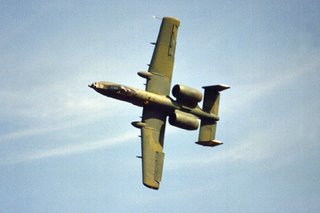
On the way to my first point, I looked up at the treeline just in time to see an A-10 attack aircraft flying just above it, perhaps 200' above the ground. What a great reminder of my ultimate goal - to become an Army Aviator!

I was already good at Land Nav going in to the Army. By now I could pretty much walk straight to my points. So, I quickly located all of my targets, then settled down next to the last one to soak up the sun and write my fiancee a long letter. Few and far between are the times you have an opportunity to just relax in BCT and AIT. If you learn your job well, you may be able to make a few opportunities for yourself.

Once the sun went down, we received a real treat (by SIT - Soldier in Training - standards anyway). We maintained a fire 24 hours a day since arriving at the training location. The Drill Sergeants felt that it was time for us to celebrate our accomplishments. Up they rolled with the company van, and unloaded boxes of hotdogs, buns, desserts, soda (yes - soda. A rare treat!). We enjoyed a feast, roasting our hotdogs over the bonfire.

We began telling jokes, some quite PC and some most certainly not. One really dumb one somehow stuck with me:

A pirate walks into a bar with a big ship’s wheel down his pants. The bartender says, "Excuse me, sir, do you know you have a ship’s wheel down the front of your pants?" The pirate answers… "Aargh, it’s driving me nuts!!"

Then, suddenly, a disturbance in the brush! A figure was running around our camp, holding what looked like chemical lights. It was running... comically. Literally. The Senior Drill Sergeant instructed some of us to give chase. Our team rushed into the trees. The figure ran off, then turned to run right through our festivities! Is it a bird? Is it a plane? No... it's... Spiderman?!?! That's right, Spiderman came running through our camp. After quite a chase he was brought down, and his mask removed. Spiderman was really ... Wait! Some of my readers are headed off to AIT soon. Better not spoil the suprise :-)

Foreign Weapons

To contact us Click HERE
Everyone going through BCT gets to qualify on the M16. In AIT, we get to qualify with other US weapons as well. Today we did something that few do in AIT - learned about foreign weapons - the weapons most likely to be used against us.

The class was divided into groups, and rotated around various stations. My first stop was to learn how to disassemble and reassemble an AK-47. It's a very simple weapon, yet effective for that same reason. It's simplicity makes it very reliable. Not accurate, but reliable. We learned that the average enemy we are likely to encounter is poorly trained in the use of the AK-47, making it even less likely that a given shot will find its mark. However, what the AK lacks in accuracy (especially in the hands of poorly trained combatants) it makes up for in sheer volume of lead it can hurl down range.

After learning to disassemble the AK, we had an opportunity to fire it. Unfortunately TRADOC will not let us fire live ammo from foreign weapons, but we did get to shoot blanks. Not as good as the real thing, but fun nevertheless.

After learning about the AK, I moved on to a station that teaches about the RPG-7 (RPG stands for Rocket Propelled Grenade). They are very cheap in a country like Iraq, with the launcher costing perhaps $50 and individual grenades selling for only a few dollars. The weapon can be effective if used properly. It can also be deadly to the user. We were told of a Marine in Iraq who was severely injured when an RPG he was firing "just for kicks" malfunctioned.

We also got to spend a little time with the Dragonov sniper rifle, and the RPK machine gun. The RPK is similar to the AK, but has a heavier barrel to substain high rates of fire for longer without overheating.

Part of the Psyop job is convincing the supported unit that you can add value to their mission. One of the instructors was traveling with a Marine battalion when they discovered a weapons cache. He picked up an AK-47 and properly cleared and disassembled it like it was the most natural thing in the world. Talk about instant credibility.

29 Eylül 2012 Cumartesi

Gray Area Army Retired

To contact us Click HERE
I am approaching 25 years service as an Army Civilian employee and my career as an Army Reserve soldier is occasionally referenced at the military facility where I work. With regard to that service, just 11 more years until I will be able to draw a retirement check for my 24 years of active and reserve service. There has been little movement in efforts to reduce the retirement age for those of us that answered the call to active service before 2008… with impending budget constraints; I doubt the momentum to consider such a reduction is very strong.

Someone asked me the other day what a gray area retiree was (I used the term to describe myself) so an explanation -

Members of the Retired Reserve under age 60 (not entitled to reserve retired pay until reaching age 60) are often referred to as Gray Area Retirees. These Gray Area Retirees are entitled to unlimited use of Military exchanges and Morale, Welfare and Recreation (MWR) facilities and commissaries.

Gray Area Retirees must have a valid military Reserve Identification Card. Eligible family members must have a Reserve Family Member ID Card. These cards are available at all military facilities that issue identification cards.

At age 60 and upon receiving retired pay, individuals must complete an application to receive the Retired (blue) ID Card. At that time we and our family members can become eligible for medical and dental care at military facilities (as provided by the installation); TRICARE programs; unlimited use of commissaries and exchanges; and unlimited space "A" travel.


Between the time of Reserve retirement and age 60 we essentially must fend for ourselves in medical insurance, etc…typically handled through our civilian employers. This includes any treatment for un-documented or uncharacterized service connected treatments. I.e. treatment for illness or injury which at time of treatment cannot be directly tied to service. So, for example if you were a Reserve soldier poisoned by KBR water treatment in Iraq and incur illness later on…hopefully your civilian health insurance and your wallet can cover the bill…

Is it time to reconsider this in light of National Health Care discussions?

MNSTC-I cases its colors

To contact us Click HERE

My unit in Iraq has ceased operations – this information from Army describes the inactivation which occurred on New Year’s Day;

Lt. Gen. Michael D. Barbero, commander of Multi-National Security and Transition Command-Iraq commander rendered final honors and cased MNSTC-I’s colors, signifying the commands’ official inactivation.

“Though we are activating a new headquarters today,” said Odierno, USF-I commanding general, “the support we give our Iraqi partners will be no different than they received under MNF-I.”

MNF-I was established May 15, 2004, taking over command for Combined Joint Task Force 7 to handle all strategic-level operations for coalition forces contributing to OIF.

“Troops from 30 different countries served in the Multi-National Force-Iraq,” Air Force Maj. Dennis Kruse, master of ceremonies, said at the ceremony. The major subordinate commands included MNC-I, MNSTC-I, the Joint Contracting Command-Iraq, and TF 38, he added.

Along with MNF-I, MNC-I was also activated May 15, 2004, as the operational-level headquarters overseeing multi-national divisions and forces in Iraq, which included Multi-National Divisions North, South, and Baghdad, Multi- National Force-West, 13th Expeditionary Support Command and Combined Joint Special Operations Task Force, as well as 13 separate task forces, brigades and battalion-sized organizations.

To organize, train and equip Iraq’s military and police forces, MNSTC-I was established on June 28, 2004. Working closely with the Iraqi Ministries of Defense and Interior, MNSTC-I assisted in forming more than 250 Army and police battalions throughout the country.

“We’ve made tremendous strides together since the dark days of 2006, 2007,” Petraeus said. “The number of attacks per day, including Iraqi data, has been reduced from well over 200 per day in 2007, to fewer than 15 per day in recent months.”


I guess that means the mission of those organizations is done. From the time we in the 98th Divisioin (USAR) arrived as the first staff and soldiers in MNSTC-I in September 2004 through inactivation in 2010 MNSTC-I accomplished a lot. A great share of the organization was staffed by Reserve soldiers throughout its history. I hope that the success of a bunch of individuals from the Army Reserve deploying to a wartime command and completing mission is not lost to time.

LTG Helmly on the 98th Division Deployment

To contact us Click HERE

Found an Article about the 98th Division’s deployment to Iraq. (This is the unit I deployed with in Sep 2004) This deployment was discussed as a pivotal and sea state change deployment for the Army Reserve by the USAR Commander at the time LTG James R. Helmly.

As a side note -I had the opportunity to work for General Helmly when he was the 78th Division Commander where I was the senior Civilian for the 1st Brigade at the time. He was a no nonsense commander that worked thru all obstacles. I recall staff meetings where he regularly dammed the bureaucracy and insisted on getting tasks done quickly.

Here is some of the Combat Studies Institutes interview with LTG Helmly as it related to our deployment:

When the 98th Division (Institutional Training) deployed to Iraq in 2004-2005, Major General James R. Helmly was the chief of Army Reserve and commanding general of United States Army Reserve Command. In this interview, focusing on the 98th’s deployment and conduct of its Iraqi Army training and advisory mission and related larger issues, Helmly relates how early on he saw a need to reconstitute the Iraqi forces, a chronic shortage of US Special Forces to train them, and thought to himself, “Why can’t we use our table of distribution and allowances organized institutional training divisions and training support divisions?” The biggest problem he encountered in developing this idea was actually resident in his own staff. “That is, they kept coming back with the schoolbook answer. So we had a ‘Come to Jesus’ meeting one day and I slammed the door and said to them, ‘Goddamn it! Let me make it abundantly clear what we’re going to do….You could sort of see the eyes opening on these guys and they finally understood.” After the concept was briefed and accepted, Helmly states that another group of problems arose from “this bastardized system of request for forces (RFF). Instead of being given
a mission or a task with commander’s intent and then allowing the units to generate the capability,” he explained, “we went to a bastardized thing off the back of some sloppy envelope for an RFF that was frankly just very cumbersome. It really tied our hands in terms of the flexibility of putting together a task organized unit of the 98th.” As the deployment of the 98th to Iraq proceeded, its employment varied considerably from his original concept. According to Helmly, “My original initiative was to use them in a training base capacity inside a foreign army…. What occurred, though, was that many of the 98th became embedded trainers inside Iraqi units.” Even so, he added, “the 98th soldiers did all very well and I admire and respect them greatly for that.” Helmly also notes that Iraq has focused the US Army on details, that the needs of “the long war” have been neglected, that the current method of foreign military sales and assistance is broken, and that an organization dedicated to training foreign militaries needs to exist. What’s more, personal agendas and institutional inertia contribute to these challenges.


With regard to the 98th Division deployment – LTG Helmly was asked what happened after the unit was deployed:

General Helmly: I visualized the FA-TRAC deploying and establishing a deployed version of an institutional training base. I saw us establishing a Fort Benning, Georgia or a Fort Knox, Kentucky inside Iraq and training civilians to become soldiers. What occurred, though, was that many of the 98th became embedded trainers inside Iraqi units. When I was a young private, when my unit was completing basic combat training it was announced that one of the drill sergeants I had was going to deploy as a platoon sergeant to Vietnam. A couple years later, I learned he had been killed – and he had been a very fine noncommissioned officer (NCO). The point of this is: everyone knows that the ultimate objective of any soldier is to engage in ground combat, but I thought the 98th would essentially do a training base kind of thing. But what actually happened was that many of these outstanding soldiers found themselves embedded inside Iraqi units. As a result, there were several who were killed or wounded in action who were operating more or less as advisors rather than trainers in a training base capacity. Had I known that, I wouldn’t have argued against using the 98th, but I would have understood things better from the beginning. My original initiative was to use them in a training base capacity inside a foreign army. After all, one of the things we’ve learned in this war is that clerks, cooks and truck drivers all have to be prepared to fight as infantrymen. I have to say, though, that the 98th soldiers did it all very well and I admire and respect them greatly for that.


The entire interview is fascinating reading – anyone with an interest in the workings at the Department of Army Level in 2004 and the revolutionary deployment of a training unit to the warzone to train and support the Iraqi Army under LTG Petraeus will want to scan the document found here. http://cgsc.cdmhost.com/cdm4/item_viewer.php?CISOROOT=/p4013coll13&CISOPTR=333&CISOBOX=1&REC=7

And – thanks LTG Helmly – for the compliment to our unit at the end… and for the confidence in our 98th Division soldiers –

Interviewer: The first part was your assessment of the 98th’s experience and performance over there.

LTG Helmly: I think due to the ability, willingness and courage of the individual soldier and small groups of soldiers, it was a success. That is the cornerstone of success. It proved we could take an organization that was not designed to deploy, put it into a significantly different set of conditions, and the small units and lower-ranking leaders would cause it to succeed. I think they added great capability and I was extremely impressed with them. It’s a tremendous group of soldiers. I saw many of them off before they left and they were positive. There wasn’t any talk of why they had to go do this mission. Of course they harbored their own personal fears as individual soldiers, but they were very proud. By the way, people tend to put stereotypes on things. A lot of people said we were just weekend warriors and things like that. Well, a lot of that first group of the 98th that deployed were drill sergeants and officers who had a lot of active duty time and commanded MTOE formations. They were really a high-speed group of capable and professional leaders. They were excited about the ability to buy into training and building up the Iraqi Army. Nobody was awarded the Congressional Medal of Honor but there were a lot of heroes out there who didn’t get accorded that honor but who were nonetheless heroes in their own right. They suffered some pretty serious casualties. It was some really significant and outstanding history.

Duke Deluca - formerly of MNSTC-I J7

To contact us Click HERE
Saw the General Officer appointments this last week and its with pleasure that I noted the Col Peter "Duke" Deluca (USACE) was promoted to General Officer. Duke was the chief of the MNSTC-I J7 shop in Iraq in 2004-2005. He was a highly respected officer and motivator for his organization and he was amoung those active component members that recieved the 98th Division USAR soldiers and made them excell in their duties.

I have respect for Duke and know he will do well in his assignment at the Corp of Engineers. (I had a two month assignment with them for Hurricane Katrina and can vouch for the organization) Duke - congratulations to you - well deserved.

You can see his bio here

How is your pay, soldier?

To contact us Click HERE

From the Stars and Stripes – this news item on the cancellation of the Defense Military integrated personnel transaction system - a system to update soldier records and pay:

After spending $1 billion and 12 years of effort, Defense officials have pulled the plug on a hapless plan to bring the four military branches under a single payroll and personnel records system.

"This program has been a disaster," Adm. Mike Mullen, chairman of the Joint Chiefs, told the Senate Armed Services Committee earlier this month. He said he applauded the decision to kill what proponents said would be the largest, fully-integrated human resource system in the world.


Well – interesting in its implications to deploying Reserve and National Guard soldiers. Many of us suffer problems when we deploy – as noted :

More than time and money had been lost, however. Military personnel, particularly Guard and Reserve members, increasingly have been frustrated by pay and personnel record errors. The Commission on the National Guard and Reserves urged two years ago that a single, integrated pay and personnel system was needed "as soon as possible" to rectify inadequacies in fragile legacy systems.

More than 90 percent of Army Reserve and Guard soldiers activated to serve in Afghanistan and Iraq through 2003 reported significant pay errors. Aggressive actions were taken to lower that rate but without the benefit of what was needed — a modern payroll system that no longer treated active and reserve component members differently.


Can you believe that – up to 90 percent pay errors for guard and reserve soldiers… such a dedicated workforce that bears this for years while waiting for a solution…now we are starting all over. Having been at the pay problem window myself, I can tell you it makes it hard on guard and reserve soldiers, but they are not in the service for the money. Lets hope a simple and effective solution can be found soon. You can find the entire stars and stripes article here.

28 Eylül 2012 Cuma

Guard and Reserve Retirement Conference

To contact us Click HERE

The National guard is hosting a conference for its retirement Services Offeicers (The Army Reserve does not have such a person - yet- To jumpstart the flow of information between the National Guard Bureau and the states on retirement services, the Soldier Family Support and Services branch will convene March 1-5 in Savannah, Ga.

Geared toward the full-time program managers and state retirement services officers. The focus of this conference is to distribute information via stats to guard soldiers, notify soldiers of changes in policy, as well as things to think about for the future.

This conference also deals with the Army-wide certifications required of all retirement services personnel.

As noted by the conference organizers there are individuals that work pieces [within the retirement process], but there is not a retirement branch for Reserve components. Considering the gap in retirement or separation from the guard and reserve and the eventual reciept of retirement pay may be 20 years or more that would seem counter intuitive to efficient processing.

The conference isn't only for Soldiers in the Army Guard. The Army Reserve will also participate.

The Army Reserve does not have the structure that the guard has at state level, in fact, the Army Reserve does not even have RSOs in the structure. This conference offers an opportunity to try to get that developed.

You can get an excellent primer on Guard and Reserve retirement from The Army G-1 who has published an Army National Guard information guide regarding non-regular retirement. http://www.arng.army.mil/soldierresources/Documents/ARNG%20Information%20Guide%20for%20non-regular%20retirement%2015%20Apr%202009.pdf

Alcohol in the Warzone

To contact us Click HERE

In the Marine Times this week is an article by Rick Maze – he describes comments by Senator Jim Webb regarding the alcohol policy in the warzone. The policy – known as General Order Number 1 is a policy of no alcohol, pornography, etc… that has been in force for deployed soldiers everywhere since at least 1991. As noted in the article found here

Sen. Jim Webb, D-Va., a Vietnam veteran and former war correspondent who now chairs the Senate panel that oversees military personnel policy, seemed to endorse the idea of letting troops in war zones drink alcohol as a way to relieve combat stress.


We know that our soldier are highly stressed. Jim has taken a shot at the military’s sacred cow of moral righteousness – embodied in the general order. As he said

One thing worth investigating, Webb said, is whether a ban on alcohol consumption in the war zones — which he said is primarily a nod to host-nation sensitivities — should be lifted.


Well I agree with Jim to consider lifting the ban, but I believe the ban on alcohol is more an outright effort of the Defense Departments senior leadership to restrict any basic freedom not meeting a highly refined puritanical ideal embodied by a few high ranking members.

Soldiers are men and women - a few drinks in off hours, away from host nation members would go a long way towards reducing the burden they carry

Gay service in the Military

To contact us Click HERE

I was a soldier for 24 years in a variety of assignments. Over the course of my career I came in contact with lots of different military personnel, and I never identified any one by their sexual preference while in the line of duty.

We discuss the concept of allowing gay soldiers to serve “openly”. The word "openly" bothers some people. To my knowledge we've never allowed a heterosexual soldier to practice his/her sexuality "openly." Nor should we allow a gay soldier to practice his/her sexuality “openly”.

When soldiers are off duty, they are allowed to pursue their own lives and interest within reason. And I am a fervent believer that what they do behind closed doors is their business. I don’t see the need to consider such activities as if we will suddenly be faced with some “open” sexuality issue within the ranks. As I have said in previous posts, I really don’t care what religion, hobbies, activities, music, party affiliation, color of underwear, etc… a soldier has or enjoys… it’s a matter of professional competence that determines who shares my foxhole.

It’s time to stop letting the media and special interest groups making soldier service by gays an issue. I’d say welcome all physically and mentally qualified people into the armed forces. I don’t need to know nor do I require you to proclaim your sexual preference. Don’t ask, don’t tell – replace it with doesn’t matter.

Practice your soldier skills, do them well, and we’ll get along just fine.

5 years ago today

To contact us Click HERE

It was 5 years ago that we loaded up our armored vehicles and headed to Baqubah, Iraq. A warm spring day in Iraq and we had the task of going to look at several police stations, District police facilities and a couple potential military facilities. The day was going to be a long one – Easter Weekend in Iraq. We had lived a charmed life so far in the deployment up to that point. On the ground since September 2004 and few exciting incidents other than the daily impersonal bombings, mortar and rocket attacks in the IZ.

That all changed it seems the day I earned the Combat Action Badge. Easter Sunday, 27 March 2005 – 5 years ago. It was that day after an curiously inauspicious day in Baqubah that on our return – someone detonated a large IED aimed at taking us out… suddenly it got to be personal and direct.

Never before that day did we feel like anything other than invincible and immune from attack… after all we had led a charmed life…laughing as we drove past IEDs, charging through the streets of Baghdad, Ramadi, Mahmudiah and other towns with the chip on invincibility on our shoulders. We could not be concerned with the danger as we were completing our often overwhelming job of emplacing Iraqi Military Facilities. Afterall, we started our tour using Nissan Patrol SUVs with the windows down, cruising Route Irish when it was really dangerous…now we were armored. We were American Soldiers with all the answers and swagger we could muster…. until that day someone took it personal.

That day was the first of several ever more direct actions for our members in MNSTC-I. We had 5 months left in country and it suddenly became serious in a manner that I marvel at even to this day.

Ours was not a unique story…many had a far more dangerous task, many had it far safer… we all served honorably from our unit that went to Iraq. What I’m sure of, based upon the experience, is that we also were all changed by the trip and events…. 5 years ago.

Ed, Jack & Flea To Rock Bridge School '07!

To contact us Click HERE
The line-up for this years annual Bridge School Benefit on October 27th & 28th will see Eddie reprise his 3-piece band that perfomed earlier this year at Hullabaloo, featuring Jack Irons (ex-PJ drummer, for those of you who didn't know) and Red Hot Chili Pepper's bass slapping legend, Flea!

Lets keep our fingers crossed for lots of acoustic No Code/Yield goodness!

The full line-up is:
- Neil Young
- Metallica
- Jerry Lee Lewis
- Eddie Vedder with Flea and Jack Irons
- Tom Waits with Kronos Quartet
- John Mayer
- Tegan and Sara
- Regina Spektor

Buy tickets now at www.livenation.com

27 Eylül 2012 Perşembe

Guns or butter budgeting for the military

To contact us Click HERE
The Center for Strategic and Budgetary Assessment’s Todd Harrison has a new paper out warning that DOD is fast approaching a difficult choice: either fund the people or the weapons they operate, it will soon reach the point where it can’t do both.

Read more:

This article lays out what is the perennial “guns versus butter” debate. The butter includes pay and benefit increases that have what economists call “stickiness”: they are almost impossible to rollback. The increase in pay and benefits that congress allots DOD each year will crowd out investment in research and new weapons.

The issue with the costs that are being felt by the military are exacerbated by the myriad of deployments to non-hostile locations doing the work of other agencies and that which is not born by the United Nations. At the moment we have costly military contingents in Japan, Korea (ok, still not quite settled), Germany, Italy, South America, Haiti, Cuba, and other places. We also still use soldiers to recruit, liaison with congress, at embassies throughout the world, and train at college campuses. The mission workload at these non-critical locations drains manpower and resources from the focal point of our effort. I would suggest that a real serious adjustment of the missions and tasks which are not critical to the effort should be pared down. Congress and the executive branch have become too accustomed to asking the military to do State Department, USAID, UN, contract security, personnel acquisition, humanitarian, disaster relief and other tasks without regard to the costs.

That is not to say that some costly DoD items (healthcare at the top of the list) could not be considered for adjustment. I could see a plan to increase co-pays for senior Officers, Senior Enlisted members reflecting the normal healthcare costs for most Americans. The offset for the increases gradually imposed on service members and with sufficient alternatives. Military healthcare is far better and less costly to military retirees than equivalent civilian healthcare plans. I base this on my own observations as I pay for a civilian healthcare plan because as a grey area reserve Retiree I’m not eligible for military healthcare. Trust me, the Tricare plan costs are very reasonable (absolutely cheap!) and some more costs could be shouldered by those that use it.

Packing boxes for soldiers

To contact us Click HERE
I stumbled across this great list of items to send to soldiers overseas. Having been there myself I have to give a seal of approval to the list that was constructed here…I added a note or two for extra ideas. I can also tell you that it is a big deal for a soldier to get a package from folks back home…reminds them that someone is remembering them and took the time to personally thank them by taking the time to mail. I will tell you it beats any verbal expression of support because it is tangible and genuine. So whether you’re a rookie at putting together care packages or trying to create your first one, this list has some great suggestions for the soldier you care for.
What to include in a care package
Snacks
- Jelly beans
- Rice Krispie treats
- Altoids/mints
- Beef jerky (can be turkey, etc…)
- Snack mixes (any kind of canned nuts, raisons, etc)
- Sunflower seeds, pistachios
- Chewing gum
- Candy ( non melting – so no chocolate…perhaps licorice, mike and Ike, etc)
- Little Debbie’s or other brand snacks
-Coffee and creamer/sugar…. Small Equal tablets are great too.
- Gatorade (My experience was this was very available in dining facilities so may not be needed)
-Jaw breakers
-Cookies in individual packages
- Pasta and sauce
-Canned food items
- Spices, salt, pepper (small bottles of unique hot sauces are treasured)
-Smoked oysters and sardines
-Squeeze butter (this item surprised me – again usually available via dining facilities)
-Pringles chips
-Individual items – cheap stuff that would appeal to young kids that a typical 20 year old would laugh at here, will be the talk of buddies over there… the more unusual and stupid the better – imagine a group of soldiers playing with little parachutist plastic soldiers if you will.
-Microwave popcorn
-Ramen noodles
-Macaroni & cheese
-Olives, pickles, peppers (careful that plastic containers are used)
-Cereal bars/granola bars
-Hot cocoa mix
-Soup mix
-M&M’s
-Koozies to keep water bottles and cans cool

Health/Personal Hygiene
-Deodorant
-Body powder
-Vitamins
-Foot powder
-Icy/hot patches
-Air activated heat wraps for muscle pain
-Foot massager
-Hand warmers
-Stress relief squeeze balls
-Toothbrushes & toothpaste
-Razors
-Sewing kit
-Hand & face wipes
-Disposable shower towels

Entertainment
-Dominoes
-Disposable camera
-Ink pens
-Word Puzzle books
- Poker game
-Playing cards
- Dice
- Music CD’s
-Footbag/hacky-sack
-Poker chips
-Board games
-Paperback books (read them and forward)
- DVD’s
- Newspapers – (weeklies, sports, etc… even a few pages of Wall Street Journal will get read by soldiers)
- Magazines (a great idea is take last month of your subscription magazines and put them in the package after you read them …especially gender oriented to your soldier)
- posters, stuff from gag store, catalogs from gender oriented stores with gift cards (check to see if they will mail to APO, many will)
- Cigars, chewing tobacco, lighters
- Some locations/units have lots of interaction with kids – my group always was looking for pencils, erasers, basic simple school supplies and hard candy to foster a friendship. True story – I gave some kids as a remote site a bunch of beanie babies sent to me (note picture) and they led my group to a cache of hand grenades laying on the ground.

Other Useful Items
-AA batteries
-D batteries
-Shoe laces for gym shoes and boots
-Tan or Brown t-shirts
-Boot socks
-Underwear
-Long-distance phone cards
-Air fresheners
-Canned air
-Inflatable seat cushions
-Microwaveable plates, bowls, paper plates
-Inflatable pillow
-Ziploc bags

Getting a box that is personalized or silly is great… if you have the time, personalize the box for your solider. Cut out clippings from magazines, paint a design or, if you have kids, have them decorate the box with crayons and markers. Not only will this make the receipient smile, it will make their box easier to spot in a sea of brown boxes!

Reserve Drill pay changes

To contact us Click HERE
After a considerable period of time I have been nudged to think about posting again to retired Reservist. My issue was that after a couple years departed from the Reserve life, I feel less inclined to weigh in on policies and events.However recently I saw the consideration that is circulating to change the way Reserve soldiers are paid for drill weekends. The DOD panel has proposed:
The QRMC recommended modernizing the reserve compensation system by transitioning the reserve components to a total force pay structure under which a member receives full pay and allowances for each day of duty regardless of the type or purpose of duty. Further, the QRMC recommended transitioning the reserve components to a retirement system that is more closely aligned with the active duty system with guard and reserve members receiving retired pay upon reaching their 30th anniversary of military service, having completed 20 qualifying years
While this will save money for the Army, it ignores several realities for guard and reserve members. The Drills that I participated in were anywhere from 4 hrs to 24 hours in a day (during field training) Training on a drill weekend required considerable prior training, juggling work for MUTA 5s and sacrifice to enable the training to be a valuable event. Many hours were added for unpaid administrative requirements and finally PT was required which was done on my time.Reservists do not get BAS/ housing pay which can add up as a tax free addition to base pay. We did not have health insurance. This effort will radically reduce the pay for a truly demanding job for many reserve soldiers. There is only so much G&C sacrifice that should be asked and salray reduction and retirement point restrictions are counter to attracting the best to the component.
To contact us Click HERE
Call me re-energized - I got news from Afghanistan - from my Daughter who is serving there. As you can see in the picture, she decided that even though she is a Reservist with 5 years service and two deployments (one to Iraq and this one)that she would re-enlist. Of Course I am very proud of her decision. I pray for her safe return in several week. She faces a period of change for the Army Reserve. Will the benefits be better for her? (at least one is, she can retire at 58 due to her deployments) Will the retirement system be a real benefit to her. Will this country honor the committments made to her as she has done in return? I wish her a great career...

Ed, Jack & Flea To Rock Bridge School '07!

To contact us Click HERE
The line-up for this years annual Bridge School Benefit on October 27th & 28th will see Eddie reprise his 3-piece band that perfomed earlier this year at Hullabaloo, featuring Jack Irons (ex-PJ drummer, for those of you who didn't know) and Red Hot Chili Pepper's bass slapping legend, Flea!

Lets keep our fingers crossed for lots of acoustic No Code/Yield goodness!

The full line-up is:
- Neil Young
- Metallica
- Jerry Lee Lewis
- Eddie Vedder with Flea and Jack Irons
- Tom Waits with Kronos Quartet
- John Mayer
- Tegan and Sara
- Regina Spektor

Buy tickets now at www.livenation.com

26 Eylül 2012 Çarşamba

Mounted Landnav

To contact us Click HERE
Dismounted (a.k.a. on-foot) land navigation is interesting, but realistically a Psyop soldier will not spend much time walking from place-to-place. We will drive in vehicles (generally as part of a small convoy). We learned how to navigate through unfamiliar terrain using maps, compass and GPS. We were not given moving-map type GPS units (though they may be available while deployed). Instead we used a large-but-reliable unit known as a PLUGGER.

We were given a list of "grid coordinates" to find for each of several missions. A grid coordinate is the military way of specifying a specific position on the surface of the earth. It is similar to specifying latitude and longitude, but uses a different numbering system.

We had a great time taking turns driving the HMMWV, navigating, and communicating (the person in the communication slot worked the radio to report mission progress to the TOC - Tactical Operations Center).

The experience we gained in the past few days will be invaluable for the FTX at the end of the course. The FTX is the final Field Training eXercise. Most of the FTX missions involve first locating and driving to the objective.

New Brad Album On The Way

To contact us Click HERE
It seems Ed isn't the only one who has been keeping busy during the bands recent downtime, as this myspace post from Brad vocalist Shawn Smith confirms...

"Brad fans.....

I just put up a Brad song, Reason Enough, from our soon to be released new album. It's a song of mine that I am very proud of. In other words, I dig it quite a bit. I put this up without consent from the other guys so if it is taken down in the next few days you will know that Brad is a facist regime!!

Just kidding.......

Anyway, enjoy and let me know what you think......

Love,
Shawn"

Download here: http://www.myspace.com/thediamondhand

Army Reserve Releases Tuttlingen 07 Show

To contact us Click HERE
2007-06-23 Southside Festival, Tuttlingen, DEU
Source Info:
Neumann KM140's > AETA PSP3 > Edirol R09 > Digital Mastering


Show Info:
Show #8 Of The 2007 European Tour


Disc One:
01. Intro
02. Go
03. Do The Evolution
04. Animal
05. Corduroy
06. World Wide Suicide
07. Insignificance
08. Given To Fly
09. Lukin
10. Not For You
11. Half Full
12. Severed Hand
13. Glorified
14. Spin The Black Circle
15. Life Wasted


Disc Two:
16. Even Flow
17. Comatose
18. Why Go?
19. Alive
20. Rockin' In The Free World


Download Links (FLAC):


1. http://www.megaupload.com/?d=SIP6NLCE
2. http://www.megaupload.com/?d=CLO5U85F
3. http://www.megaupload.com/?d=N0IPCAWE
4. http://www.megaupload.com/?d=I2Q8YPH0


Download Link (mp3):


http://www.megaupload.com/?d=XVTPU4IL


Download Link (Artwork, Photos):


http://www.megaupload.com/?d=UHGV2JOG


Thanks to the taper. Sound Quality Is B\B+


Enjoy!

Ed: SIMA Environmentalist Of The Year

To contact us Click HERE
"Ed Vedder was honored as Environmentalist of the Year during the 18th Waterman's Weekend, which took place on Friday, August 24 at The St. Regis Monarch Beach Resort & Spa in Dana Point (CA), organized by The Surf Industry Manufacturers Association (SIMA).
During his acceptance speech, he proclaimed the Bush administration's environmental policies “criminal,” but also asked “Why this tolerance for deception? At some point we are responsible.” He also said environmentalism has changed. “I don't think it's about chaining yourself to trees anymore, it's about doing business right. It's about finding a better business model.”
Vedder said the idea of being given an award for environmentalism was “like being given an award for breathing. It's what you have to do to stay alive.” Ha added: "What's really important is to be here tonight with the people (environmental organizations) that do the real work. As a band we help raise visibility and we donate a minimal amount of money, but if the environmental movement is like a wave, the nonprofits are the surfboard steering us on the wave, and we (the band) are like the wax just trying to make things stick with the public."
But Vedder also had some fun, taking a surfer's point of view of work.“I had a choice to write a speech or go for a three-hour surf with Mark Richards. I went for a surf.”
He also poked fun at his coziness with the big names of surfing. “I never got to see Hendrix play, but it's OK because I got to see Rob (Machado) and Kelly (Slater) surf Pipeline. I never got to see Perry Como or Andy Williams either, but when I watch Rob and Kelly play golf, I think it's the same.”"
Source: http://www.surfline.com/


Ed, Jack & Flea To Rock Bridge School '07!

To contact us Click HERE
The line-up for this years annual Bridge School Benefit on October 27th & 28th will see Eddie reprise his 3-piece band that perfomed earlier this year at Hullabaloo, featuring Jack Irons (ex-PJ drummer, for those of you who didn't know) and Red Hot Chili Pepper's bass slapping legend, Flea!

Lets keep our fingers crossed for lots of acoustic No Code/Yield goodness!

The full line-up is:
- Neil Young
- Metallica
- Jerry Lee Lewis
- Eddie Vedder with Flea and Jack Irons
- Tom Waits with Kronos Quartet
- John Mayer
- Tegan and Sara
- Regina Spektor

Buy tickets now at www.livenation.com

25 Eylül 2012 Salı

Cadet Relford Named 133rd Corps of Cadets Battalion Commander

To contact us Click HERE
Cadet Ryne Relford of St. Joseph, Missouri has been promoted to the Battalion Commander of the 133rd Corps of Cadets.

c/LTC Relford is the son of Rob and Linda Relford, of St. Joseph.

c/LTC Relford is in the Wentworth Military College SROTC program and runs cross country for the Red Dragons.

Please check back on the blog to learn more about c/LTC Relford and the experiences that helped him to be named Battalion Commander in the coming days.

Sounding of the Cannon Kicks Off New Year

To contact us Click HERE
1SG Willis Gives Cadet Oath to 133rd Corps of Cadets
The 133rd year of academics at Wentworth Military Academy & College has officially begun.

The Sounding of the Cannon ceremony signifies the beginning of the new year.

The ceremony was conducted at 9am this morning.

Senator David Pearce spoke to the cadets and the opportunities that they have in front of them this year.

In addition to Senator Pearce speaking, the Legendary Lexington Mayor, COL Jerry Brown, welcomed the cadets to Legendary Lexington and encouraged them to take part in the community this coming year.
The new Battalion Commander was introduced to the 133rd Corps of Cadets and he addressed The Corps for first time with very strong words about his vision for the 133rd Corps of Cadets which focused on the values of Wentworth Military Academy and College.
Stay tuned to this blog for more details on the Sounding of the Canon throughout the day.

Battalion Commander Relford Speaks to 133rd Corps of Cadets

To contact us Click HERE
C/LTC Ryn Relford, of St. Joseph, Missouri addressed the 133rd Corps of Cadets on Monday, August 20th at the Sounding of the Cannon ceremony.

In his inaugural address, Relford emphasized incorporating the Wentworth core values and mission into "Our Corps" on a daily basis. Here is Relford's speech:  

"Good morning distinguished guests, alumni and 133rd Corps of Cadets. It is an honor to be presented with the opportunity to take command of this corps. Today marks the day of a great journey in which all of us will be tested but there is no doubt in my mind that with teamwork and determination we will be able to become a corps that will be remembered for all the correct reasons. "The mission of Wentworth Military Academy & College is to provide the environment and resources necessary for us to develop our potential in academics, leadership, physical well-being, moral character, and self-discipline so we can become productive citizens in a diverse, global society." My challenge for the 133rd Corps is to incorporate the mission of Wentworth into our daily lives in order to establish a corps far greater than the corps that have come before us and the ones to follow. Throughout our time together we must not only know the standard, but rise above the standard. It is imperative that we institute teamwork, honor, integrity, respect and duty into our corps, by doing this we will create an environment in which all cadets can and will flourish. Take pride in this corps we are in it together and must be for this year to be successful. Take pride."

Check Out Athletic Website for Updates

To contact us Click HERE
Want to know what is happening with a particular team or athlete at Wentworth Military Academy and College?

The best way to follow Red Dragon Athletics is by going to "Athletics" from the Wentworth website or go directly to the athetic website:

www.wmadragons.com

We are currently working to get the site updated. Sports that are currently in season are more up to date than the others.

Check back regularly for updates. Go Red Dragons!

Former Cadet Becomes 20th Chief of Staff of the Air Force

To contact us Click HERE
In 1971-72, former Cadet Mark A. Welsh III was a part of the first Falcon class at Wentworth Military Academy and College.

On August 10, 2012, General Mark A. Welsh III became Chief of Staff of the United States Air Force. His confirmation makes him the 20th person to serve as the senior uniformed officer in the U.S. Air Force.

A native of San Antonio, Texas, General Welsh entered the Air Force in June 1976 as a graduate of the U.S. Air Force Academy. Prior to the U.S. Air Force Academy, General Welsh attended Wentworth Military College as a Falcon Scholar. General Welsh is the second Wentworth alumnus to serve as a Four Star General, along with U.S. Army General Bill Hoge, Class of 1908.


To read more about General Mark A. Welsh, please link to this article from Stars and Stripes:
Welsh Known for his Compassion for Airmen

23 Eylül 2012 Pazar

Things that go Bump in the Night

It was a clear night, with a decent moon. It was easy enough to see - if you're in a clearing. Go into one of the many tree groves, though, and things become very, very dark.

Tonight we had the opportunity to put our land navigation skills to the test - in the dark. We broke into 4 man teams, and were given objectives that were kilometers apart. Getting your bearing, and walking a straight line once you have it, is much more difficult when you can't see distant objects well - or at all. We decided to have two team members watch their compass as we walked to maintain direction, while a third kept count of the pace. The fourth team member did a backup pace count, but his main job was to keep track of the big picture - to watch for landmarks such as fire roads and streams, and see if we cross them about when we calculate that we should.

Our objectives were four 3' tall posts, each marked with a chemical light. They were all in wooded, hilly areas so you often had to be within about 30' to make them out. Each of the two compass men walked what they thought was the correct direction, then we started our search inbetween the two, moving out in ever expanding circles until locating the objective. Once we had a particularly hard time locating our landmark, so we decided to have all four people keep track of direction for the next one. My three teammates moved off in one direction, while I took a decidedly different route, about 5 degrees to the left of them. The temptation is strong to think "three of them going one way, and me going my own way... I must be wrong". Still I stuck to my guns, and pretty much walked right up to the marker. I would not suggest separating from your team like that in a combat environment, but there is an important lesson to be learned - don't just assume you're in the wrong because the majority has a different opinion.

After that marker, we moved into a very heavily wooded area. We had to exercise light discipline, meaning we only use as much light as absolutely necessary to navigate. At one point I sensed more than saw something very near to me, and stopped suddenly. Carefully probing the area immediately in front of me with my red lens flashlight, I discovered a large (4") spider no more than a foot in front of my face! Had I not stopped, it would have made contact with my left cheek right below my eye. That would have made for a nasty bite! One person in the group took a photo ... I'll try and get a copy to post (OK we really broke light discipline when we took a flash picture :-) Don't do that in combat.)

Moving back toward the base, we were moving tactically on what we thought was the right bearing. We were in a competition to try and return as quickly as possible, but we also had to move quietly. Moving through a large, open field SUDDENLY the night erupted in sound, and there was a flurry of motion DIRECTLY in front of one of my team mates. He jumped back - just in time to see that he had flushed some quail from their roosting spot :-) We all had a laugh and returned to the base camp.

If I had to describe the night in three words, they would be Teamwork, Excitement and Fun.

Bring Fresh Socks

When you're in the field, you want to bring as many fresh socks as you can manage (given all the other gear you need, too). If you only bring one pair per day, it may not be enough. Land navigation today proved that point.

This morning, we set out in two-man teams as a final practice before our solo land navigation test. Two of our points were bisected by a stream. This wasn't your California mountains stream of clear water over sand and rocks. It was stagnant water, and mud, and muck. It smelled bad.

We attempted to cross by balancing on the branches and roots of the many plants growing in and around this source of moisture. Unfortunately, many of our would-be supports were dead and rotting. We carefully applied our weight, tested our new foothold, then took a step. We almost made it. The final 4' proved a little tough. I had to jump for the other side, but the extra force of pushing off was just enough to snap the old root I was balanced on. I came up about 6" short on the other side, and down I went. My boot slid all the way into the muck on the far bank. I quickly stepped up to the far bank, but not before the putrid water had soaked my socks. In the Army you quickly learn that you're going to get dirty, and you get over it. The lesson here is that dry socks are vital to good foot hygene. If you're in the field, be sure you always have a clean pair to change in to.

Back at the base, we sat down to enjoy lunch. They actually gave us plenty of time to eat our MRE's. Suddenly, I heard the cry "Oh Sh!t". Scanning the area, I noticed one of my fellow soldiers had apparently stowed his travel-size shaving cream in his cargo pocket after morning hygene. Something he did during land navigation must have set it off, because his pocket was filled to overflowing with white foam. It was the first time in a while I had a meal with a show :-)

As afternoon came, it was time to prove our land navigation skills. We were each assigned 4 points, and given 4 hours to navigate to at least 3 of the 4. Ever since entering basic training, we have not been alone. In BCT we were ALWAYS in a group and under supervision. In AIT we were sometimes given pass, but the buddy rule was in effect. Even there we had to travel in a group of at least two. It felt strange being out in the woods by myself. Strange in a good way. I thoroughly enjoyed the afternoon. I did not stress over finding my points because my navigation skills are strong. Upon reaching my second point, I relaxed with some left-over MRE food I had brought along. The 15 minute break, just laying there soaking up the sun, felt very good.

My third point was an odd one. All of the area surrounding it was burned down. I surveyed the area, and noticed that one fallen tree in the area was still smouldering. I did not have enough water on my person to put it all out, but was concerned that any winds could fan the flames and start a larger fire. Three points in hand, 2 hours left on the test, and my 4th point less than 1km from the base, I returned to report the fire hazard.

At the base, the Company Commander himself decided to drive me out to the site of the burn with jugs of water. In AIT you really respect your Drill Sergeants. The First Sergeant, their bosses, is someone you REALLY respect. The Company Commander is the First Sergeant's boss. In spite of his rank (he was a Major), the Commander quickly put me at ease. We quickly discovered that we're both pilots, and spent quite a bit of time talking airplanes while driving to the site of the burn. It was a good time. Before long we found the burning tree and drenched it with water.

The test was scheduled to be over in four hours. As the sun began to set, two students had not yet returned. We held dinner for them. One team, one fight. As it became totally dark, concern began to spread. Then a search party was formed. I was asked to join one of the search teams. We navigated along the route of one of the missing soldiers, checking to see if he had perhaps fallen and broken a leg en route. Drill Sergeants and instructors drove the fire roads. Finally, after about an hour of search, the word came down that they had been found along a nearby highway. One of them had gotten totally lost and followed the other, who it turned out was also totally lost. They went in pretty much exactly the wrong direction for miles and miles before hitting a highway. You might think that they could catch hell once they returned, but the opposite was the case. They were welcomed back with only a moderate amount of jokes.

In all, the day was fun and successful. Just remember to bring fresh socks.

Spiderman!

Most people passed the Land Nav test, but many struggled. Of course the two lost boys had to retest today (see yesterday's blog). The Instructors decided it would be a good idea to send us off solo again, with a new list of points, to refine our skills.


On the way to my first point, I looked up at the treeline just in time to see an A-10 attack aircraft flying just above it, perhaps 200' above the ground. What a great reminder of my ultimate goal - to become an Army Aviator!

I was already good at Land Nav going in to the Army. By now I could pretty much walk straight to my points. So, I quickly located all of my targets, then settled down next to the last one to soak up the sun and write my fiancee a long letter. Few and far between are the times you have an opportunity to just relax in BCT and AIT. If you learn your job well, you may be able to make a few opportunities for yourself.

Once the sun went down, we received a real treat (by SIT - Soldier in Training - standards anyway). We maintained a fire 24 hours a day since arriving at the training location. The Drill Sergeants felt that it was time for us to celebrate our accomplishments. Up they rolled with the company van, and unloaded boxes of hotdogs, buns, desserts, soda (yes - soda. A rare treat!). We enjoyed a feast, roasting our hotdogs over the bonfire.

We began telling jokes, some quite PC and some most certainly not. One really dumb one somehow stuck with me:

A pirate walks into a bar with a big ship’s wheel down his pants. The bartender says, "Excuse me, sir, do you know you have a ship’s wheel down the front of your pants?" The pirate answers… "Aargh, it’s driving me nuts!!"

Then, suddenly, a disturbance in the brush! A figure was running around our camp, holding what looked like chemical lights. It was running... comically. Literally. The Senior Drill Sergeant instructed some of us to give chase. Our team rushed into the trees. The figure ran off, then turned to run right through our festivities! Is it a bird? Is it a plane? No... it's... Spiderman?!?! That's right, Spiderman came running through our camp. After quite a chase he was brought down, and his mask removed. Spiderman was really ... Wait! Some of my readers are headed off to AIT soon. Better not spoil the suprise :-)

Foreign Weapons

Everyone going through BCT gets to qualify on the M16. In AIT, we get to qualify with other US weapons as well. Today we did something that few do in AIT - learned about foreign weapons - the weapons most likely to be used against us.

The class was divided into groups, and rotated around various stations. My first stop was to learn how to disassemble and reassemble an AK-47. It's a very simple weapon, yet effective for that same reason. It's simplicity makes it very reliable. Not accurate, but reliable. We learned that the average enemy we are likely to encounter is poorly trained in the use of the AK-47, making it even less likely that a given shot will find its mark. However, what the AK lacks in accuracy (especially in the hands of poorly trained combatants) it makes up for in sheer volume of lead it can hurl down range.

After learning to disassemble the AK, we had an opportunity to fire it. Unfortunately TRADOC will not let us fire live ammo from foreign weapons, but we did get to shoot blanks. Not as good as the real thing, but fun nevertheless.

After learning about the AK, I moved on to a station that teaches about the RPG-7 (RPG stands for Rocket Propelled Grenade). They are very cheap in a country like Iraq, with the launcher costing perhaps $50 and individual grenades selling for only a few dollars. The weapon can be effective if used properly. It can also be deadly to the user. We were told of a Marine in Iraq who was severely injured when an RPG he was firing "just for kicks" malfunctioned.

We also got to spend a little time with the Dragonov sniper rifle, and the RPK machine gun. The RPK is similar to the AK, but has a heavier barrel to substain high rates of fire for longer without overheating.

Part of the Psyop job is convincing the supported unit that you can add value to their mission. One of the instructors was traveling with a Marine battalion when they discovered a weapons cache. He picked up an AK-47 and properly cleared and disassembled it like it was the most natural thing in the world. Talk about instant credibility.

Mounted Landnav

Dismounted (a.k.a. on-foot) land navigation is interesting, but realistically a Psyop soldier will not spend much time walking from place-to-place. We will drive in vehicles (generally as part of a small convoy). We learned how to navigate through unfamiliar terrain using maps, compass and GPS. We were not given moving-map type GPS units (though they may be available while deployed). Instead we used a large-but-reliable unit known as a PLUGGER.

We were given a list of "grid coordinates" to find for each of several missions. A grid coordinate is the military way of specifying a specific position on the surface of the earth. It is similar to specifying latitude and longitude, but uses a different numbering system.

We had a great time taking turns driving the HMMWV, navigating, and communicating (the person in the communication slot worked the radio to report mission progress to the TOC - Tactical Operations Center).

The experience we gained in the past few days will be invaluable for the FTX at the end of the course. The FTX is the final Field Training eXercise. Most of the FTX missions involve first locating and driving to the objective.

Help The Recount

If you can believe it, I haven't really had much time for news lately besides checking the blog headlines. My newspapers for the past week are in an unsightly stack by the front door, and that's the very least of the things I've let slip lately. The reason would probably bore you, but I feel guilty about overlooking an important local issue: Paying for the recount in the governor's race.

The last news I heard about it, the money to pay for the recount was well in hand. As it turns out, not so much.

But Howard Dean's Blog for America has been watching Washington closely, and they've asked their supporters to chip in to the state party to cover the costs of a full hand recount. One that would have happened automatically if the first machine count had matched the second.

The deadline is Thursday. Tomorrow as of the time of this post, today as of the time you're probably first reading it. Please contribute to the WA State Democratic Party today if you can, so we can count every vote.

Nothing Wrong With The Party

Thanks to everyone that helped with the recount. Senator Kerry, MoveOn.org, the DNC, Democracy for America, and many individual donors helped pay to ensure that every vote for governor is counted here in Washington State.

Yet no matter how the recount goes, many Democrats are wondering where the party goes from here. We did pretty well here in Washington, keeping our House and Senate seats and winning back the state legislature. It was a good showing, but it's hard not to notice the siege mentality that seems to be springing up in the ranks.

There are as many ideas about where the party needs to go, and what it needs to fix as there are people to voice them. After reading through a lot of soul-searching and navel-gazing (and writing some) about The Direction, it was a pleasure today to read this:
There is a Party of fiscal responsibility... economic responsibility.... social responsibility... civic responsibility... personal responsibility... and moral responsibility.

It's the Democratic Party. ...


That's the stuff. Click over for more.